5 Real-World Scenarios Where Disposable Notes Save the Day

James Whitfield
23 May 2026
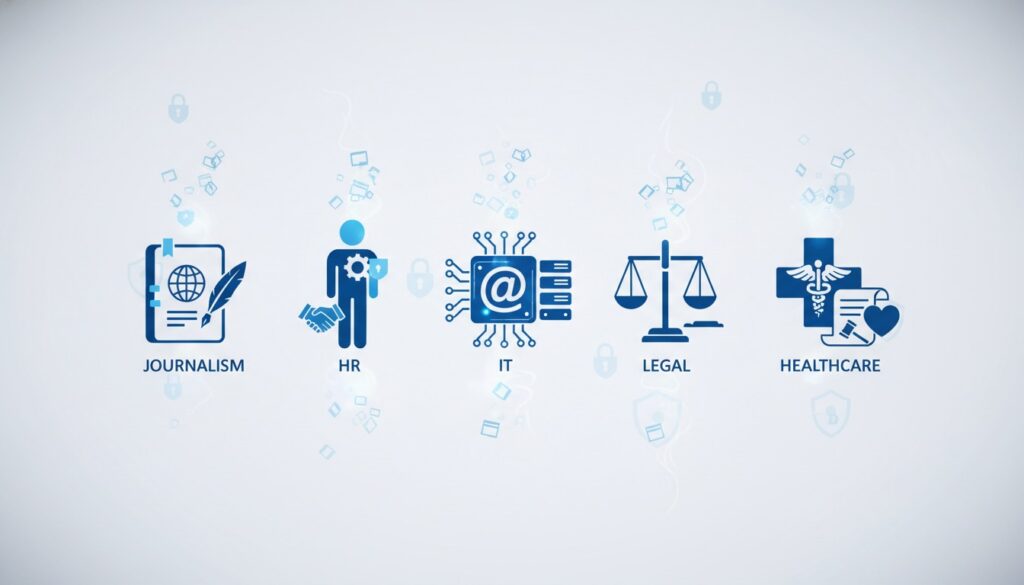
5 Real-World Scenarios Where Disposable Notes Save the Day
In an era where data breaches dominate headlines and privacy regulations grow stricter by the quarter, the way we share sensitive information matters more than ever. Every day, professionals across industries face the same dilemma: How do I share confidential information quickly and securely without leaving a permanent digital trail?
Enter disposable notes — self-destructing, temporary messages that vanish after being read. While the concept might sound like something out of a spy movie, the reality is far more practical. From newsrooms to hospital corridors, from startup boardrooms to legal offices, disposable notes are quietly becoming an essential tool in the modern professional’s toolkit.
In this post, we’ll explore five compelling, real-world scenarios where disposable notes don’t just add convenience — they genuinely save the day.
Scenario 1: Journalists Protecting Confidential Sources
The Problem
Investigative journalism depends on trust. Whistleblowers, anonymous tipsters, and confidential sources put themselves at enormous risk when they share information with reporters. If their identity is exposed — through a hacked email account, a subpoenaed chat log, or even a carelessly forwarded message — the consequences can be devastating: job loss, legal prosecution, or worse.
Traditional communication channels like email, SMS, and even many encrypted messaging apps store message history by default. Even when messages are deleted on one end, they may persist on servers, in backups, or on the recipient’s device.
How Disposable Notes Save the Day
Disposable notes offer journalists a powerful layer of protection:
- One-time access: The source shares critical details — names, documents, meeting locations — via a disposable note link. Once the journalist opens it, the note is permanently destroyed.
- No server-side retention: Unlike email, there’s no copy sitting on a server waiting to be subpoenaed or breached.
- Plausible deniability: With no persistent record of the communication, both parties maintain a higher degree of anonymity.
- No account required: Sources don’t need to sign up for a service, download an app, or create a traceable account.
- Emails can be forwarded — intentionally or accidentally — to unintended recipients.
- Email accounts get compromised in phishing attacks.
- Messages sit in inboxes indefinitely, creating a long-term data liability.
- Compliance frameworks like GDPR, HIPAA, and SOC 2 increasingly require organizations to minimize the retention of personal data.
- Send salary details and offer terms via a self-destructing link that can only be opened once.
- Share onboarding credentials (temporary passwords, system access codes) without worrying about them lingering in an inbox.
- Communicate termination details or severance terms privately, reducing the risk of screenshots or forwarding.
- Set expiration times so that if the candidate doesn’t open the note within 24 or 48 hours, the information simply disappears.
- Passwords stored in plain text in chat logs can be accessed by anyone who compromises the account.
- Shared credentials in email threads get indexed, backed up, and archived — sometimes for years.
- Even “secure” enterprise messaging platforms often retain message history for compliance purposes, meaning that password is now part of a permanent record.
- Create a note containing the username, temporary password, and any relevant instructions.
- Send the link via your normal communication channel (Slack, email, text).
- The recipient opens the link, retrieves the credentials, and the note self-destructs immediately.
- Even if the communication channel is later compromised, the attacker finds only a dead link that leads nowhere.
- Data breaches at law firms have exposed millions of privileged documents in recent years.
- Inadvertent disclosure — sending privileged information to the wrong recipient — can waive privilege entirely in some jurisdictions.
- Discovery obligations in litigation may require producing email archives, potentially exposing sensitive strategy discussions.
- Settlement offers and counteroffers can be shared via self-destructing notes, ensuring no permanent record exists outside of formal filings.
- Witness preparation notes can be communicated without creating discoverable documents.
- Confidential legal opinions can be delivered to clients without the risk of indefinite email storage.
- Conflict check information containing sensitive client identities can be shared temporarily during the intake process.
- Text messages containing PHI violate HIPAA if the device isn’t properly secured.
- Emails with patient data must be encrypted and access-controlled.
- Faxes — still widely used in healthcare — can be received by unauthorized individuals.
- A referring physician can share a patient summary with a specialist via a self-destructing note, ensuring the information doesn’t persist beyond its immediate purpose.
- Pharmacy staff can receive temporary prescription clarification details without creating permanent records outside the pharmacy system.
- Insurance coordinators can share authorization codes and patient identifiers through ephemeral links rather than email.
- Telehealth providers can send follow-up care instructions containing sensitive details via notes that expire after being read.
- Always verify that your disposable note provider uses end-to-end encryption and does not store note contents on their servers after delivery.
- Disposable notes should supplement, not replace, your organization’s official Electronic Health Record (EHR) system.
- Document in your HIPAA compliance plan how and when ephemeral messaging tools are used.
- Ensure that the use of disposable notes aligns with your organization’s minimum necessary standard — sharing only the PHI required for the specific purpose.
- Finance: Sharing account numbers, wire transfer details, and trading strategies.
- Education: Communicating student disciplinary records or accommodation details.
- Real Estate: Exchanging pre-approval amounts and personal financial documents.
- Government: Sharing classified briefing summaries and internal policy discussions.
- No accounts to create — reducing friction and adoption barriers.
- No software to install — works in any web browser.
- No data to breach — if the information doesn’t exist, it can’t be stolen.
- No compliance headaches — automatic deletion supports data minimization principles.
- Try creating your first disposable note — it takes less than 30 seconds.
- Share it with a colleague and watch it self-destruct after reading.
- Integrate it into your workflow for any situation where sensitive information needs to be shared temporarily.
- Establish team guidelines for when and how to use disposable notes as part of your organization’s security practices.
Pro Tip: Journalists can combine disposable notes with a VPN and the Tor browser for an additional layer of anonymity when receiving sensitive tips.
Major press freedom organizations have increasingly recommended ephemeral communication tools as part of a journalist’s digital security toolkit. Disposable notes fit perfectly into this framework because they are simple, require zero technical expertise from the source, and leave virtually no forensic footprint.
Scenario 2: HR Teams Sharing Offer Letters and Salary Details
The Problem
Human Resources departments handle some of the most sensitive information in any organization: salary figures, social security numbers, benefits packages, performance reviews, and termination details. Sharing this information via standard email is risky for several reasons:
How Disposable Notes Save the Day
With disposable notes, HR teams can share sensitive employment information with confidence:
Real-World Example: A mid-sized tech company switched to disposable notes for all initial offer communications. Within six months, they reported zero incidents of salary information leaking to other candidates or employees — down from three incidents the previous year.
This approach also demonstrates to candidates and employees that the organization takes data privacy seriously, which can be a meaningful differentiator in competitive hiring markets.
Scenario 3: IT Teams Sharing Passwords and Access Credentials
The Problem
Every IT professional has experienced this moment: a colleague needs access to a system, a server, or a third-party tool right now. The temptation is to fire off the password in a Slack message, a text, or — worst of all — an email.
This creates a security nightmare:
How Disposable Notes Save the Day
Disposable notes are arguably the simplest and most effective way to share credentials securely:
Best Practices for IT Credential Sharing
| Practice | Why It Matters |
|—|—|
| Always use temporary passwords | Reduces risk if the note is intercepted before being opened |
| Set short expiration windows | If not opened within 1 hour, the note expires automatically |
| Pair with password rotation | Change the shared password after the recipient confirms access |
| Use password-protected notes | Add a passphrase that you communicate via a separate channel |
Security Tip: For maximum protection, share the disposable note link via one channel (e.g., email) and the note’s passphrase via a different channel (e.g., a phone call). This two-channel approach ensures that compromising a single channel is insufficient to access the credentials.
Scenario 4: Legal Professionals Exchanging Privileged Communications
The Problem
Attorney-client privilege is one of the most sacred principles in law. Lawyers routinely exchange highly sensitive information with clients, co-counsel, and expert witnesses: case strategies, settlement figures, witness statements, and confidential legal opinions.
Yet the legal industry has been notoriously slow to adopt modern security practices. Many law firms still rely heavily on email for client communications, and a surprising number use consumer-grade tools with minimal encryption.
The risks are significant:
How Disposable Notes Save the Day
Disposable notes offer legal professionals a practical way to share the most sensitive communications:
“The best way to protect privileged information from disclosure is to ensure it doesn’t exist in a retrievable format any longer than necessary.” — A principle increasingly endorsed by legal technology consultants.
Several AmLaw 100 firms have begun incorporating ephemeral messaging tools into their secure communication protocols, particularly for cross-border matters where data sovereignty laws add additional complexity.
Scenario 5: Healthcare Providers Sharing Patient Information
The Problem
Healthcare professionals frequently need to share patient information with colleagues, specialists, pharmacies, and insurance providers. In the United States, HIPAA (Health Insurance Portability and Accountability Act) imposes strict requirements on how Protected Health Information (PHI) is transmitted, stored, and disposed of. Similar regulations exist worldwide — PIPEDA in Canada, the Data Protection Act in the UK, and GDPR across the European Union.
The challenge is that healthcare moves fast. A physician consulting with a specialist about a patient’s lab results needs to communicate quickly, but standard communication tools create compliance risks:
How Disposable Notes Save the Day
Disposable notes can serve as a compliant, practical communication layer for certain types of healthcare information sharing:
Important Compliance Considerations
Compliance Tip: Before adopting any disposable note tool for healthcare communications, have your compliance officer review the provider’s Business Associate Agreement (BAA) and data handling practices.
Why Disposable Notes Are Becoming Essential Across Industries
The five scenarios above share a common thread: sensitive information that needs to move quickly but shouldn’t persist indefinitely. This is a challenge that spans virtually every industry:
Conclusion: The Future of Sensitive Communication
We live in a world where every message, email, and chat log is a potential liability. Data breaches are not a matter of if but when. Regulations are tightening. Clients, patients, employees, and sources all expect their information to be handled with the utmost care.
Disposable notes represent a fundamental shift in how we think about digital communication. Instead of asking, “How do we secure this message?” we ask a better question: “Does this message need to exist at all after it’s been read?”
In most of the scenarios we’ve explored, the answer is a resounding no. The offer letter details have been noted. The password has been entered. The source’s tip has been recorded in a journalist’s secure notebook. The patient referral has been processed. The settlement figure has been communicated.
The message has served its purpose. Now let it disappear.
Ready to Start Using Disposable Notes?
Whether you’re a journalist safeguarding a source, an HR manager protecting salary data, or an IT professional sharing credentials, disposable notes can transform the way you handle sensitive information.
Here’s how to get started today: